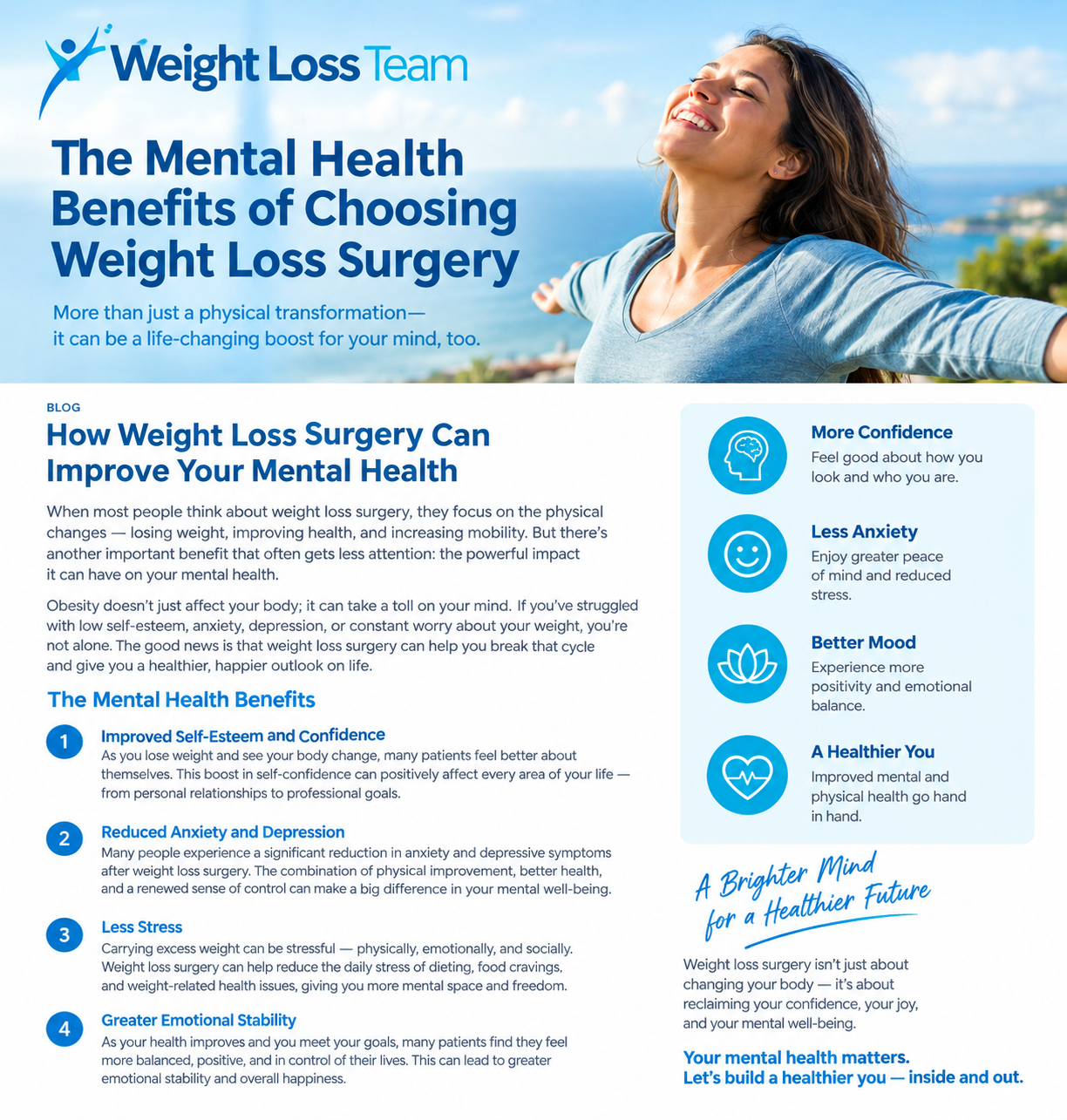
The Mental Health Benefits of Choosing Weight Loss Surgery
Weight loss surgery is about more than the number on the scale. For many people, it can be a meaningful step toward better physical health, greater confidence, and an improved relationship with themselves. Although bariatric surgery is primarily a medical treatment for obesity, its effects can extend into many aspects of everyday life, including emotional well-being.
At Weight Loss Team, we understand that the journey toward a healthier life involves both the body and the mind. If you have struggled with your weight for years, you may know how exhausting it can feel to navigate health concerns, social situations, and repeated attempts to lose weight.
Understanding the potential mental health benefits of bariatric surgery can help you make a more informed decision about your future.
1. Improved Self-Esteem and Body Confidence
Living with obesity can sometimes affect how people feel about themselves. Negative comments, social stigma, difficulty finding comfortable clothing, and frustration with previous weight-loss attempts may contribute to low self-esteem.
After bariatric surgery, many patients experience improvements in body image and self-confidence as they progress toward their health goals.
Everyday activities that once felt uncomfortable may become easier, and patients may feel more confident participating in social events, traveling, exercising, or trying new experiences.
Remember: Your worth is not determined by your weight. Surgery is a personal health decision, not a requirement for feeling confident or deserving of respect.
2. A More Positive Outlook on Life
Years of struggling with weight can leave people feeling discouraged, particularly when diets and other approaches have not produced lasting results.
For some patients, bariatric surgery provides a renewed sense of hope and motivation. As their health improves and they begin reaching personal milestones, they may feel more optimistic about the future.
This renewed outlook can encourage patients to establish healthier routines, explore new interests, and focus on goals that once seemed difficult to achieve.
It is important to remember that emotional changes vary from person to person. Surgery can be a new beginning, but it does not eliminate every challenge in life.
3. Potential Improvements in Anxiety and Depression Symptoms
Obesity and mental health can influence one another. Some individuals experience depression, anxiety, or emotional distress related to health concerns, mobility limitations, weight stigma, or difficulties in their personal lives.
Research suggests that many bariatric surgery patients experience improvements in depressive symptoms and aspects of psychological well-being after surgery. However, results vary, and surgery does not guarantee relief from anxiety or depression.
Mental health conditions can have many causes that are unrelated to weight. Patients who experience ongoing emotional distress should continue working with qualified mental health professionals before and after surgery.
Combining appropriate medical care, emotional support, and healthy lifestyle changes can help patients address their well-being more comprehensively.
4. Greater Freedom to Enjoy Everyday Activities
Excess weight can sometimes make ordinary activities physically challenging or emotionally stressful. Walking longer distances, traveling, participating in family outings, and engaging in recreational activities may feel overwhelming.
As mobility and physical health improve following bariatric surgery, some patients find it easier to participate in activities they previously avoided.
These experiences can create opportunities for social connection, independence, and enjoyment.
Whether it means taking a family vacation, playing with your children, joining a walking group, or spending more time outdoors, having greater freedom to participate in life can contribute to a more fulfilling daily routine.
5. Reduced Stress Related to Weight-Associated Health Concerns
Obesity can be associated with health conditions such as type 2 diabetes, high blood pressure, sleep apnea, and joint problems. Managing these conditions can create physical, emotional, and financial stress.
Bariatric surgery may help improve certain obesity-related conditions, depending on the procedure and the individual patient's health.
For some patients, improvements in health and mobility can reduce concerns about daily activities and long-term health risks. Better sleep and increased energy may also support emotional well-being.
However, surgery requires ongoing follow-up, nutritional monitoring, and lifestyle adjustments. It is important to approach the process with realistic expectations and a long-term commitment to care.
6. A Healthier Relationship With Food
Many people who struggle with obesity have experienced years of restrictive dieting, frustration, or guilt surrounding food.
Bariatric surgery changes the way the body processes food and requires patients to develop new eating habits. This can provide an opportunity to establish a more structured approach to nutrition and self-care.
Patients often benefit from learning how to prioritize protein, recognize fullness, eat slowly, and make choices that support their nutritional needs.
Food can also have an emotional role. Stress, loneliness, and difficult experiences may contribute to emotional eating, and surgery alone does not resolve these underlying patterns.
Working with a bariatric dietitian or mental health professional can help patients develop practical coping strategies and a healthier relationship with food.
7. Stronger Relationships and Social Connections
When people feel healthier and more comfortable participating in daily activities, their relationships may benefit as well.
Some patients become more engaged in family activities, reconnect with friends, or feel more comfortable attending social gatherings.
Supportive relationships are especially valuable during the bariatric journey. Family members, friends, patient communities, and healthcare professionals can provide encouragement during both the rewarding and challenging stages of recovery.
It is also important to recognize that relationships do not always change in predictable ways after weight loss. Setting healthy boundaries and maintaining realistic expectations can help patients navigate these transitions.
Preparing for the Emotional Side of Bariatric Surgery
Although weight loss surgery can offer meaningful benefits, the experience is not always emotionally easy. Recovery involves dietary changes, follow-up appointments, and adjustments to established routines.
Some patients experience frustration when weight loss slows, anxiety about eating, changes in social relationships, or disappointment when emotional challenges persist.
Preparing for these possibilities can make a difference.
Consider these strategies:
Build a support system: Stay connected with friends, family members, and other bariatric patients.
Follow your care team's recommendations: Attend follow-up appointments and maintain your prescribed nutrition and supplementation plan.
Consider mental health support: Counseling can help you manage stress, body image concerns, emotional eating, or changes in your identity.
Set realistic goals: Focus on health improvements, daily habits, mobility, and personal milestones rather than weight alone.
Practice self-compassion: Give yourself time to adjust to physical and emotional changes.
Your mental health deserves attention throughout the entire process, not just during the initial stages of weight loss.
Is Weight Loss Surgery the Right Choice for You?
Bariatric surgery may be an appropriate option for people living with obesity who meet medical eligibility criteria and are prepared to participate in long-term follow-up care.
The decision should take into account your medical history, nutritional needs, expectations, emotional well-being, and individual health goals.
A qualified bariatric care team can explain the available procedures, discuss potential benefits and risks, and help you understand what to expect before and after surgery.
If you are considering bariatric surgery, remember that you do not have to navigate the journey alone.
Take the Next Step With Weight Loss Team
Your health journey is about more than losing weight. It is about building sustainable habits, improving your health, and creating opportunities to enjoy life with greater comfort and confidence.
At Weight Loss Team, we believe informed decisions and individualized care are essential parts of the bariatric journey. Learning about your options is a positive first step toward deciding what is right for you.
Ready to explore your bariatric surgery options? Visit Weight Loss Team to learn more about our services and take the next step toward a healthier future.
Email us at info@weightlossteam.com
Call us Toll Free: 1800.404.9064 or +1.818.949.6911
Medical disclaimer: This article is for educational purposes only and is not a substitute for individualized medical or mental health advice. Bariatric surgery has potential risks and benefits, and outcomes vary. Consult qualified healthcare professionals to determine whether surgery is appropriate for you.